Abrasives: the right approach
Choosing the correct type of abrasive media is paramount for a successful and profitable surface blasting job.
While abrasives come in many sizes and shapes and feature different properties, they are an essential part of the blast cleaning process, used to remove mill scale, rust and aged or degraded coatings from steel surfaces among other substrates.
Most blast-cleaning abrasives can be separated into either recyclable (nonexpendable) or expendable ones. Recyclable abrasives can be higher in cost, and used inside factories or self-contained environments, while expendable abrasives are usually low-cost synthetic minerals for use in external environments. They can also be categorised as metallic or non-metallic, and it’s particularly encouraging to see that most modern-day metallic abrasives are recycled, ensuring the management of metallic abrasives is cost-effective.
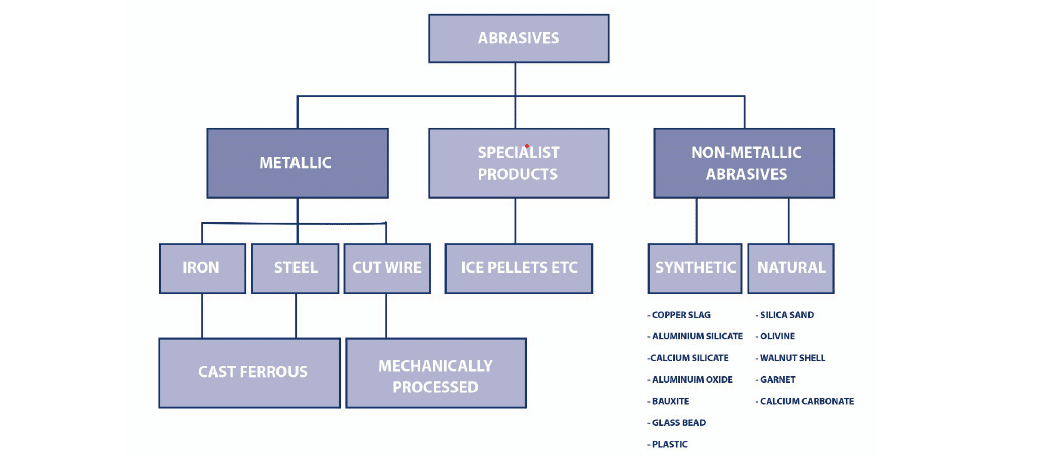
The abrasives most suitable for blast cleaning are divided into three main groups: metallic, specialist products and non-metallic. Metallic abrasives include iron, steel and cut wire, while dry ice pellets and impregnated sponge are among the variants that come under specialist abrasives. Iron, aluminium and calcium silicate together with silica sand, olivine and nut shell are among those options that fall within the synthetic and natural categories – all part of a wide choice of non-metallic abrasive solutions.
It’s also important to consider essential factors such as the shape, hardness, specific gravity and particle size as part of your abrasive surface blasting planning and preparations.
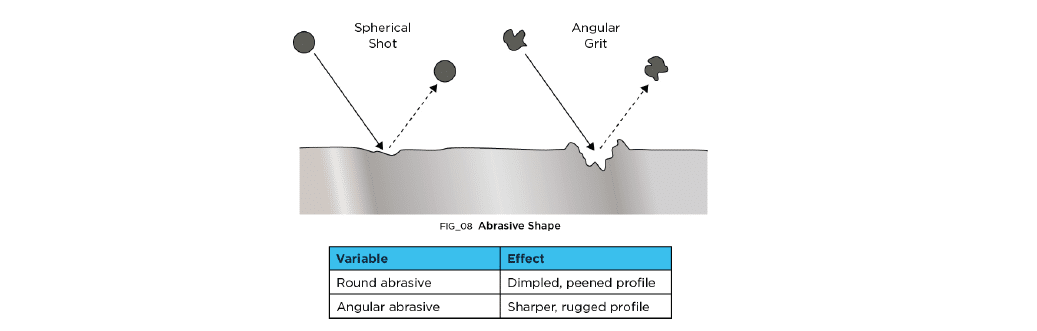
Shape specifically relates to steel abrasives – the shape of the abrasive will be either spherical (shot) or angular (grit).
Use the Rockwell scale for metallic abrasives and the Mohs’ scale for non-metallic abrasives to identify whether abrasives are hard enough for a specific cleaning process. Note that high hardness abrasives will give a deeper surface profile and generally faster production (cutting power). There will also be a low level of breakdown of the abrasive.
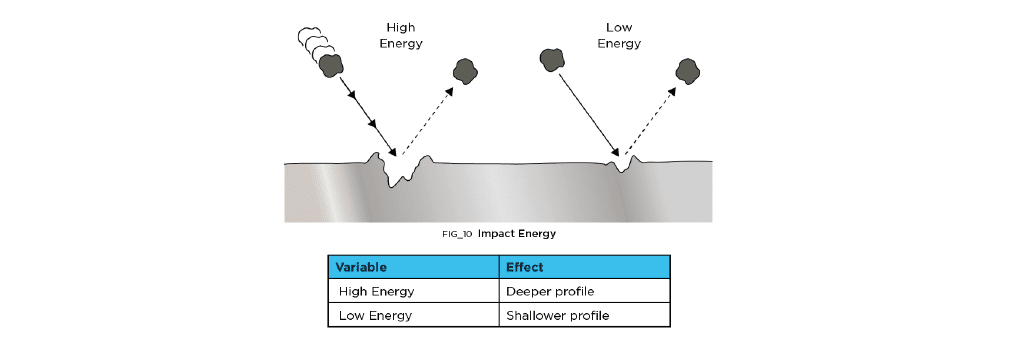
Abrasives with the highest specific gravity achieve the most efficient and fastest cleaning. The cleaning efficiency is determined by the energy impacted by the abrasive to the substrate. This is due to the physical law of kinetic energy:
E = ½ MV². In this formula, E is energy; v is the velocity of the abrasive particle; and m is the mass of the abrasive particle, which is proportional to its specific gravity.
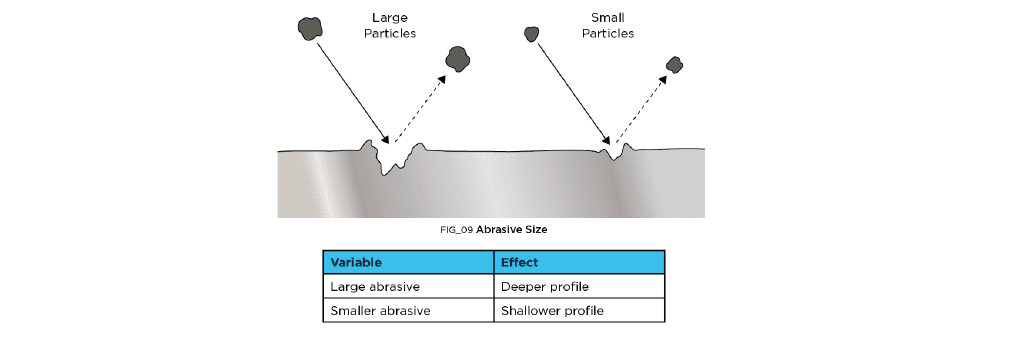
Particle size is an important variable in abrasive selection. The most effective abrasive will be the finest one that will remove the mill scale, rust and aged or degraded coatings and produce the required profile. If the abrasive is too fine or too coarse, its efficiency is reduced. Ideally, whether the abrasive is metallic or non-metallic, a mix of particle sizes produces the optimum performance and the best surface finish.
This article is part of the Blasting Series available on the Corrodere App. Discover the complete series and access a wealth of training resources designed for coatings and corrosion professionals. The app also includes convenient features such as digital ID cards, certification renewal reminders, and a unique verification code system, allowing employers and clients to instantly verify qualifications. Find out more and download the Corrodere App today.