It’s a Blast
The close familiarity of coatings used to protect steel against corrosion in the marine, offshore, petrochemical, and construction sectors is critical for those involved in conducting surface preparation work and coatings applications.
In the first of a series of new blogs, we consider abrasive blast cleaning’s paramount role in correctly preparing the level of surface and the application of a suitable protective coating at the fabrication stage, ensuring the long-term, optimum performance of assets over the duration of their lifetime.
Suitable for use across a host of ferrous and non-ferrous surfaces, including galvanised steel as well as concrete, plastic, and wood, abrasive blast surface cleaning, sometimes referred to as abrasive blasting, sandblasting, shot blasting, or grit blasting, involves directing a high-pressure stream of abrasive material against a surface. This removes scale, rust, and paint while providing a profile to aid adhesion of a coating system.
There are two main methods of abrasive blast cleaning. The first is direct pressure or air blasting, which uses compressed air combined with an abrasive mixture.
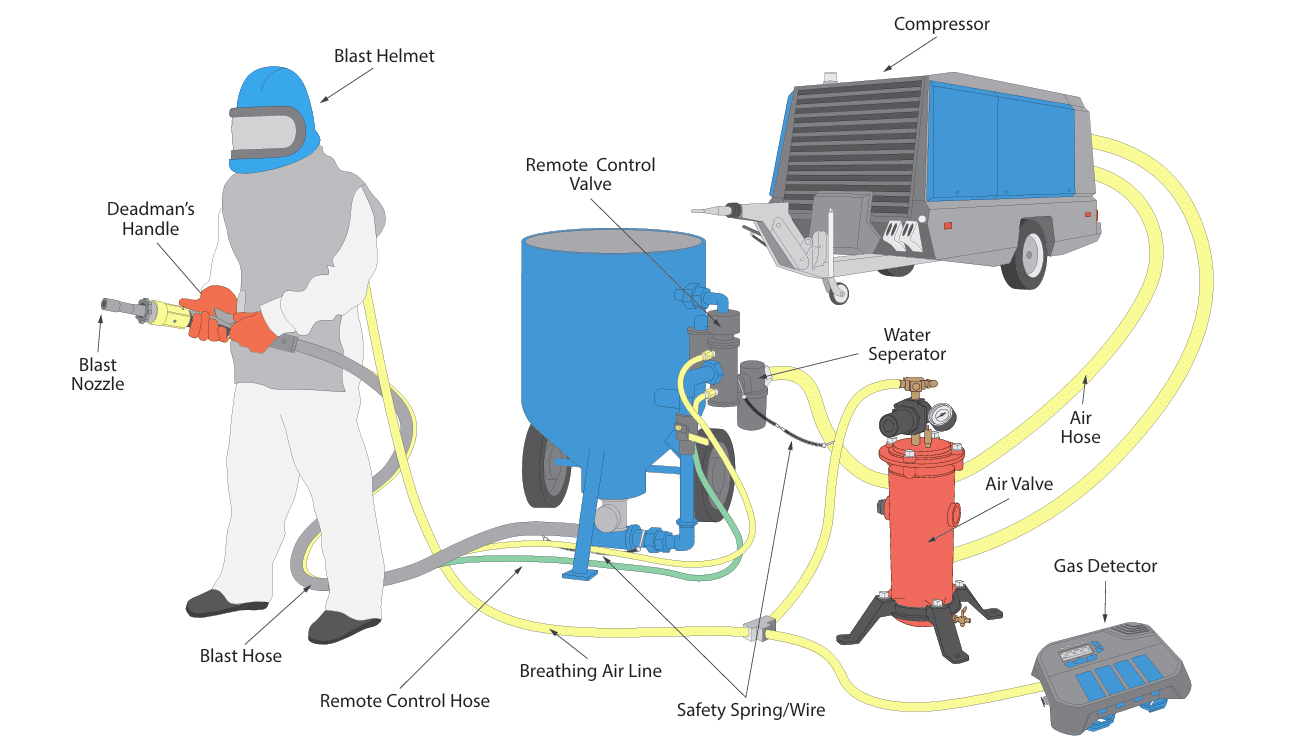
The second involves a technique that uses impellors to propel the abrasive onto the surface, commonly known as centrifugal blast cleaning.
The direct pressure abrasive blast cleaning process consists of using compressed air and solid abrasive particles projected onto the surface. The combination of high pressures, around 100 psi or 6.8 bar, and abrasive particles rapidly strips off scale, rust, and coatings, while imparting a surface profile that assists with coating adhesion. The same surface preparation technique, at lower pressures, can also be used to key surfaces such as concrete.
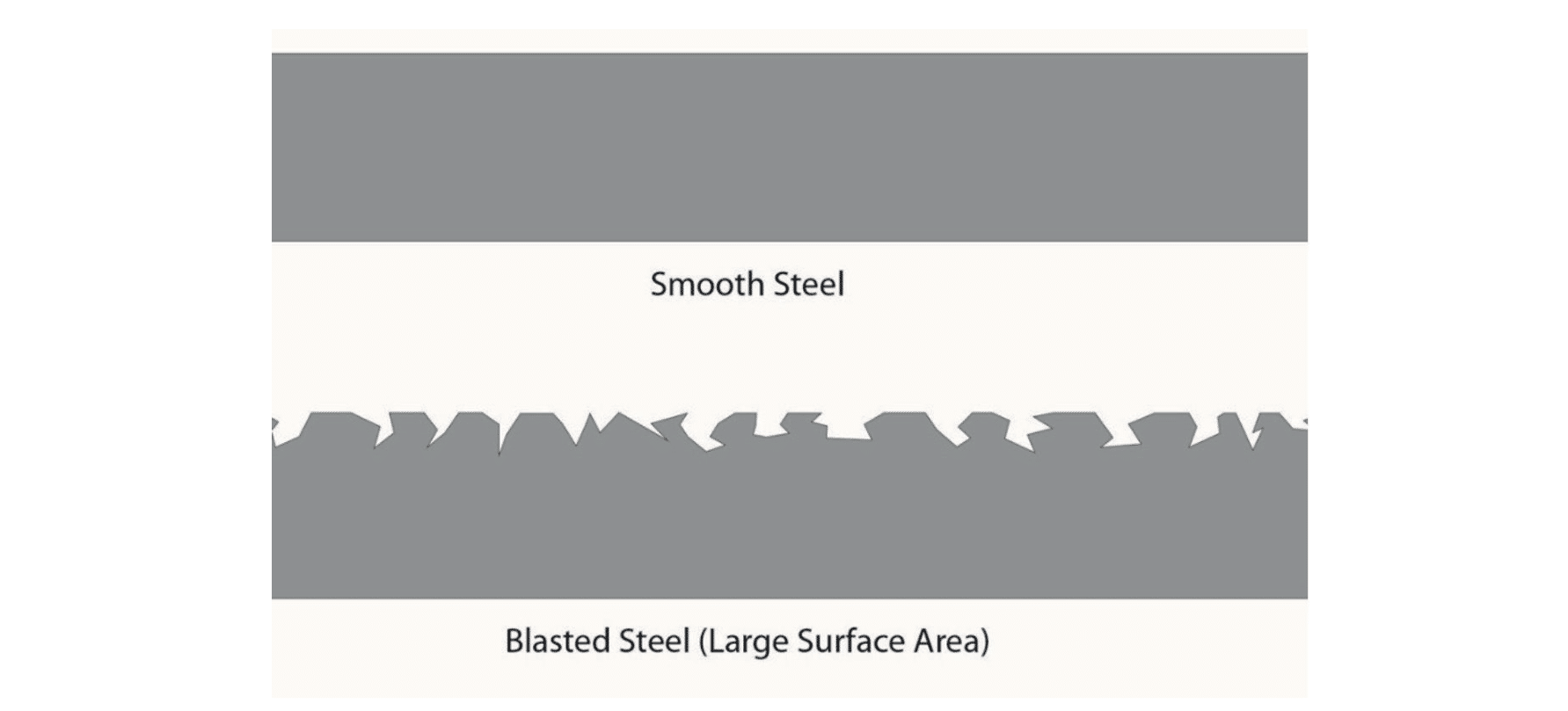
Abrasive blast cleaning can be carried out for a number of reasons, from the removal of mill scale on steel, to roughening plastic surfaces to aid adhesion, to removing laitance on concrete and flaky surfaces on wood prior to painting.
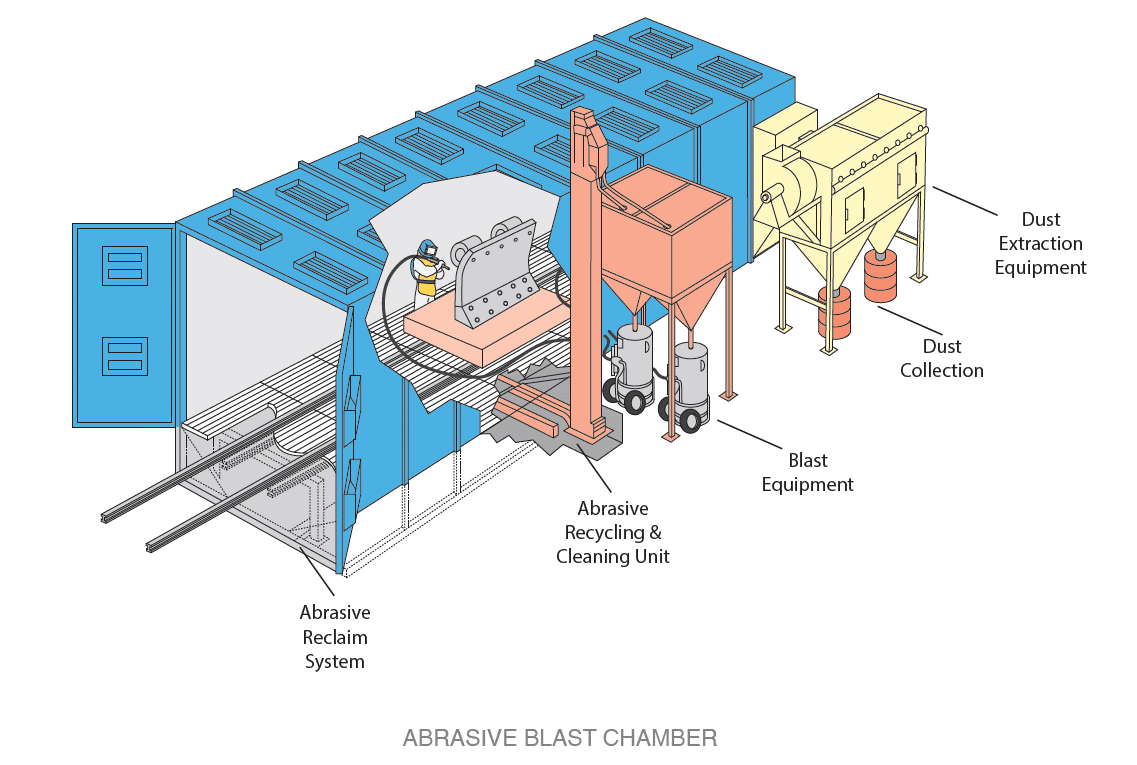
It is also important to remind those involved in surface preparation work to pay close attention to direct pressure abrasive blast cleaning equipment. This process is widely used in blast chambers within paint facilities, as well as for on-site surface preparation activities across offshore structures, ships and vessels, infrastructure, petrochemical industries, and general construction.
The use of abrasive blast cleaning equipment, which operates under high pressure, must only be undertaken by trained personnel. Full compliance with the manufacturer’s recommendations should always be followed to ensure maximum safety.
To find out more about topics like this, along with additional resources and information, explore our new Corrodere app. It is available to all Train the painter, inspection, and specialist students. Simply log in using your training platform credentials to access the app.