Protective paints and coatings: uses, benefits and types
Modern high-performance paints and coatings protect surfaces from the harmful effects of corrosion, UV radiation, and moisture, among other environmental factors.
Paint technology, the most commonly used material to protect steel structures, has evolved over the years to comply with tough environmental legislation and respond to demands for improved durability and performance from:
• Bridge
• Marine vessel operators
• Building owners
Corrosion-Resistant Paints and Coatings
Today, corrosion-resistant paints and coatings are the most widely used materials for protecting steel structures in the:
• Marine
• Offshore
• Petrochemical industries
• Construction
• Pipelines
They deliver effective, long-lasting protection in harsh environments. Coatings (linings) are also used to protect both the coated surface and material carried inside tanks, vessels, and pipelines.
While decorative paints are widely used to create an eye-catching finish on plaster, concrete, masonry, blockwork, plastic, and wood, they can also be used for other purposes, such as signage, instructions, and colour coding for safety and security applications. They can also prevent the ingress of surface moisture. They can also improve lighting in dark buildings and structures, such as car parks.
Different Types Of Generic Coatings
There are two fundamental coating types: convertible and non-convertible. The former cannot be redissolved in their own solvents when applied and cured and include alkyd resins, epoxy ester, polyurethane, and epoxy, among other types. The latter, which includes chlorinated rubber, acrylate rubber, vinyl, and bitumen, can be redissolved in their own solvents after application.
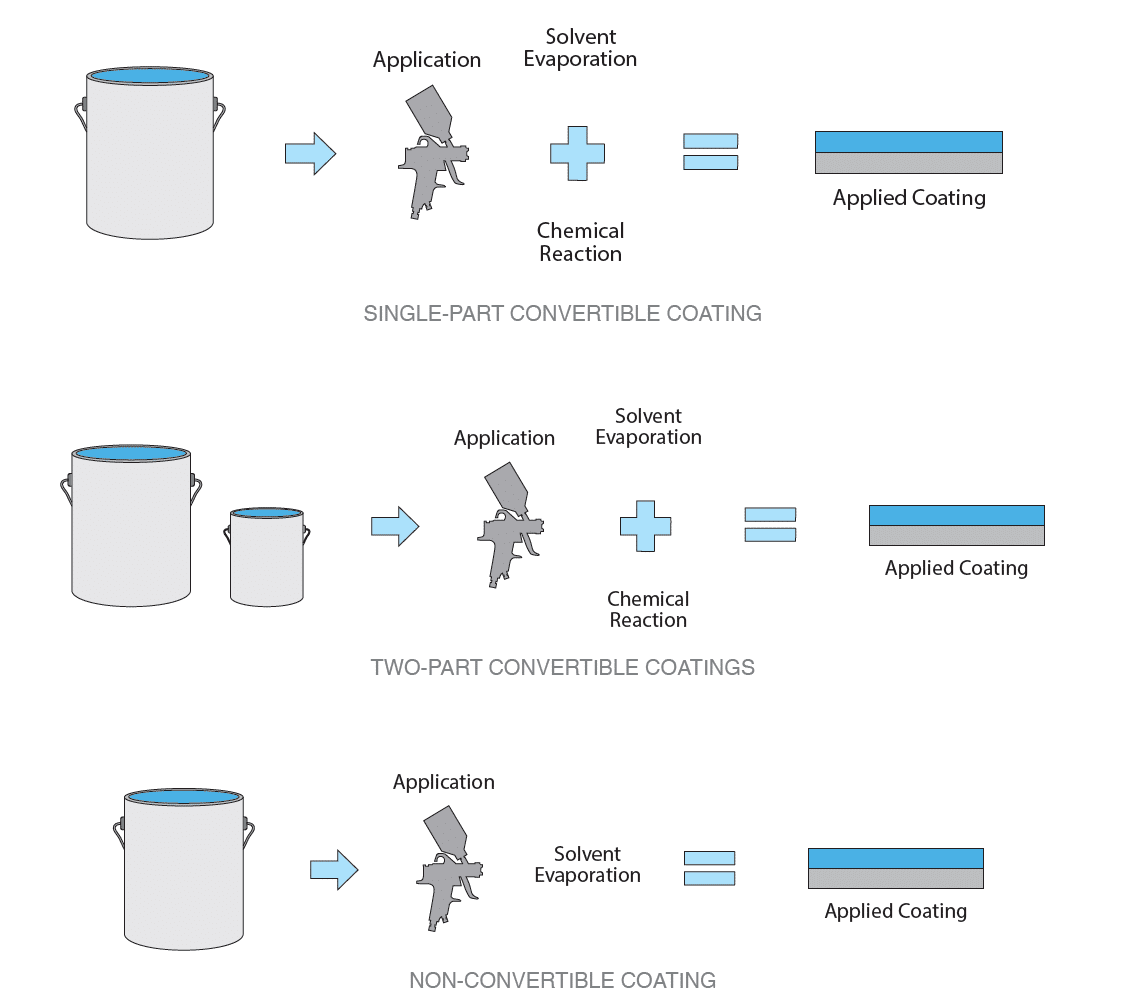
The list of generic coating types is extensive and typically includes:
• Epoxy resin
• Alkyd
• Epoxy ester
• Chlorinated rubber,
• Vinyl
• Bitumen
• Polyurethane
• Polyester
• Zinc silicate
• Vinyl ester
• Siloxanes
• Acrylic
• Moisture-cured polyurethane
Widely available to protective coatings specialists, these come as either single-part paint/coatings or two-part paint/coatings.
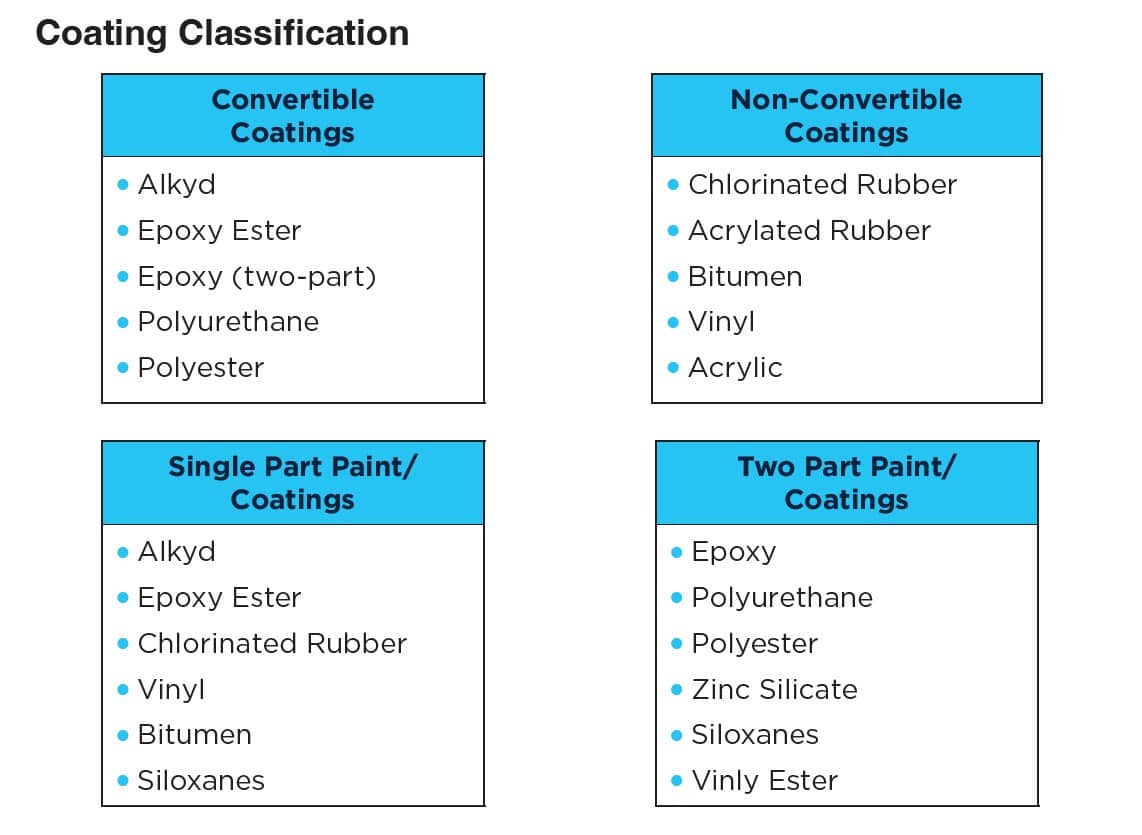
Indeed, when specifying paint and coatings, the product must be purchased ready for use and capable of application under the prescribed conditions using a brush, spray, roller, or any combination of the three. Make sure your selection offers a durable and tough finish and will spread evenly and thoroughly over a solid surface, making intimate contact (known as ‘wet-out’) to form an adherent, cohesive film after drying and curing.
The properties of an ideal paint or coating will vary extensively depending on the final use of the paint. However, at the very least, your choice should offer the following features/benefits:
• Ease of application
• Good flow-out characteristics
• Form a continuous protective film
• High opacity – covering power
• Quick-drying
• Corrosion resistance
• Water resistance
• Chemical resistance
• Heat resistance
• Colour stability
• Abrasion and scratch resistance, and
• Durability, flexibility and easily cleaned
This article is part of the Blasting Series available on the Corrodere App. Discover the complete series and access a wealth of training resources designed for coatings and corrosion professionals. The app also includes convenient features such as digital ID cards, certification renewal reminders, and a unique verification code system, allowing employers and clients to instantly verify qualifications. Find out more and download the Corrodere App today.